From Consumer to Builder
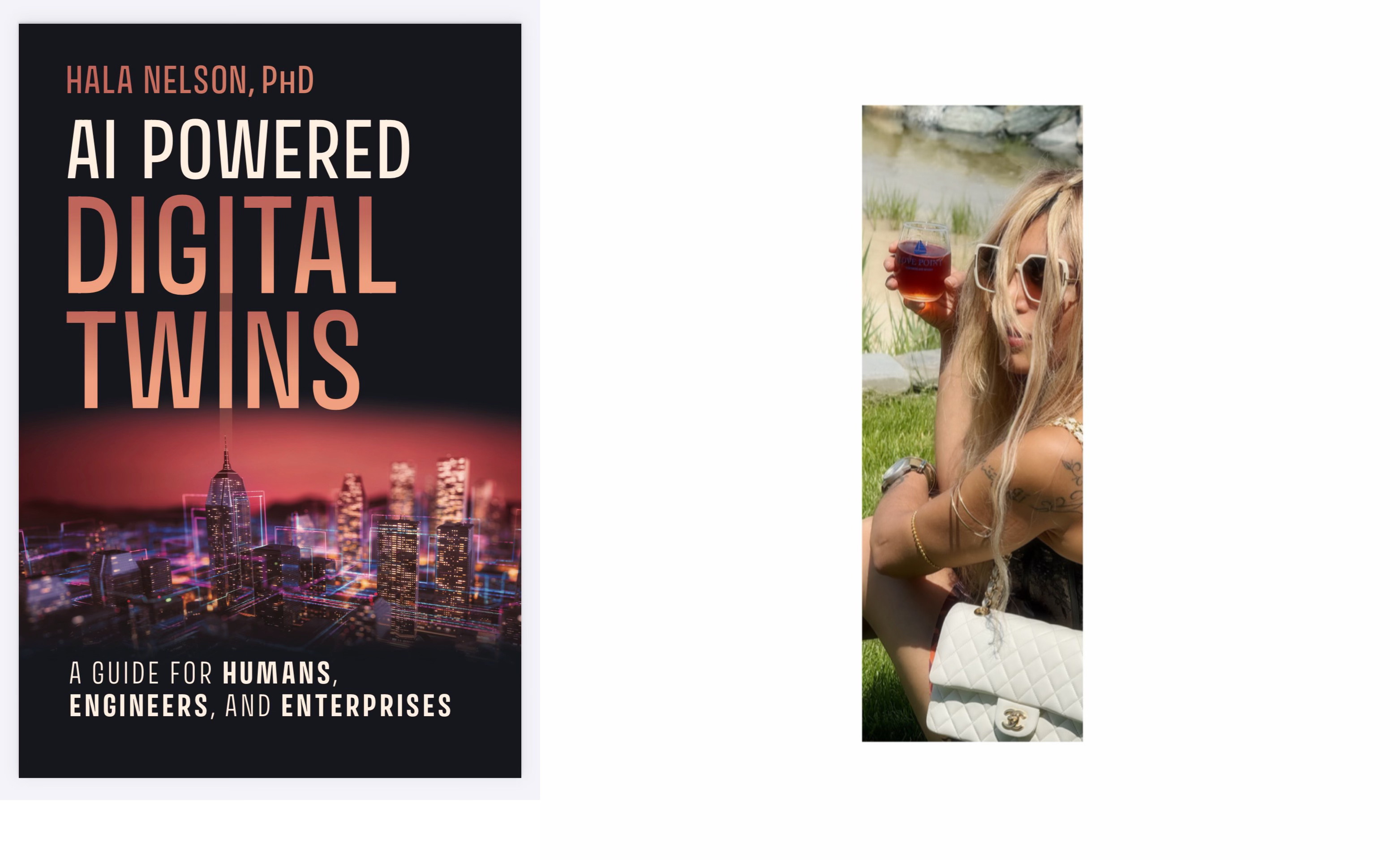
From AI Powered Digital Twins by Hala Nelson (Wiley 2026)

Most professionals use AI as a consumer: open a tab, type a prompt, read the response. This is not a workflow. Building on the API changes that. We can assemble a working agent that runs entirely on a local machine, in an afternoon, using widely available tools. The jump from AI user to AI tool-builder is smaller than it appears — the harder leap is in thinking: from user to designer of a workflow.
Engineering the Economics
When we send a book-length document on every API call, we pay for it twice: in cost and in latency. Prompt caching solves both. We mark our static context once; the model stores it server-side and reads from cache at a fraction of the cost and with dramatically lower latency. The same instinct that drives us to index a knowledge graph rather than scan it raw applies here. We must understand the cost model of every layer we build on.
Data privacy is the other economics. We cannot assume uniformity across providers. API access and consumer plans often operate under different terms, and policies evolve. Before we route sensitive documents, proprietary frameworks, or client data through any model API, we read the current terms of that provider. We verify what they retain, what they train on, and what recourse we have. We treat this the same way we treat any third-party dependency in a critical system: verify, and re-verify when terms update. For organizations with regulatory or contractual obligations, the same scrutiny extends to data residency — specifically, where data is stored at rest versus where inference actually runs, because providers draw that line differently and enterprise agreements need to account for both.
Bring Your Own Model
For some organizations, the cleanest answer to the residency problem is to remove the provider from the equation entirely. Running a capable open-weight model on owned hardware — inference that never leaves your infrastructure — eliminates a category of third-party risk, though it trades one set of costs for another: setup, sufficient compute, and the ongoing work of maintaining weights and tooling as the field moves.
Follow for more from my new book AI Powered Digital Twins Wiley 2026 (will be available to pre-order soon ;))